

...
How to Choose the Right Dosing Pump for Chemical Applications in South Africa
Blog /
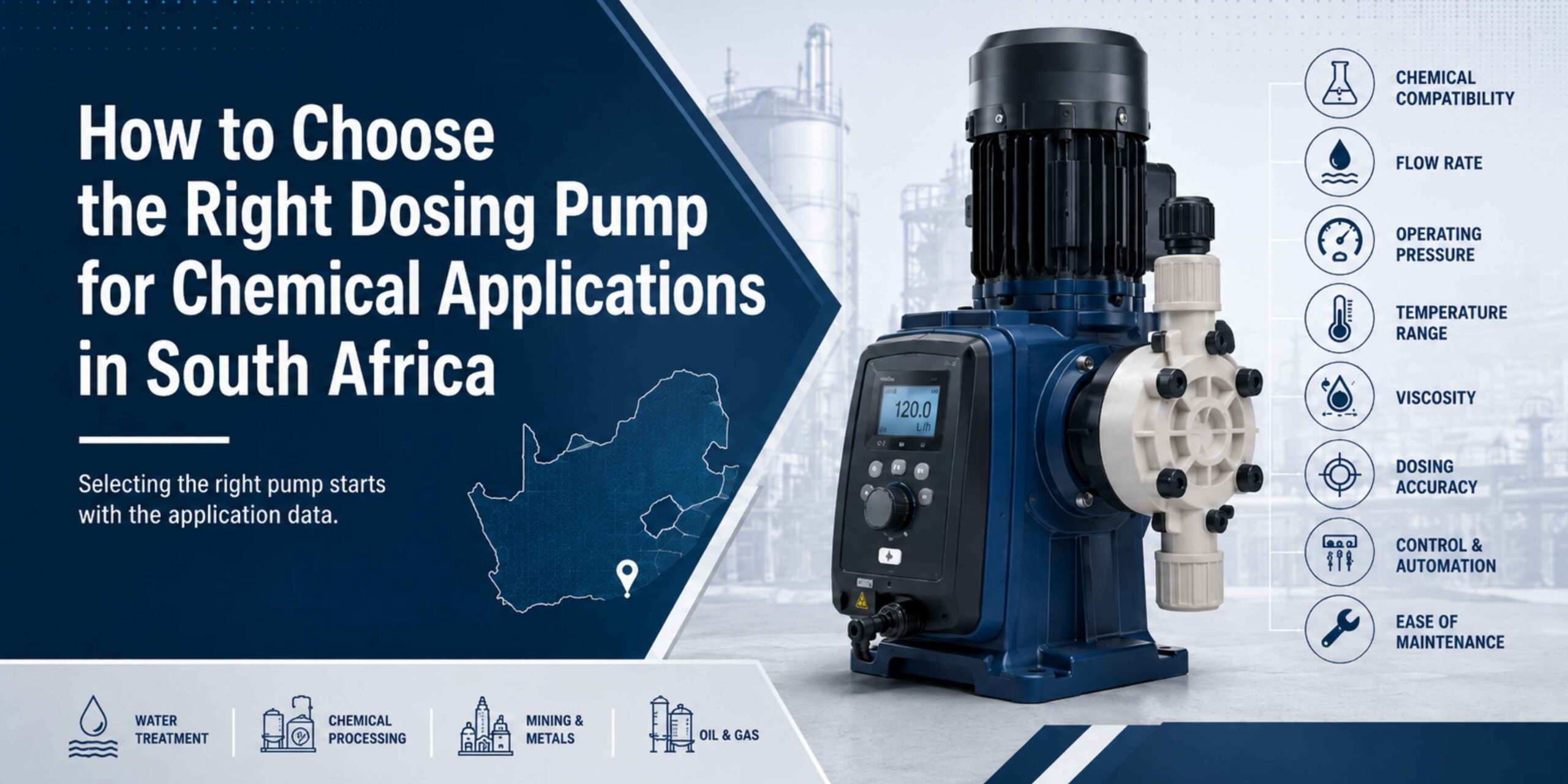
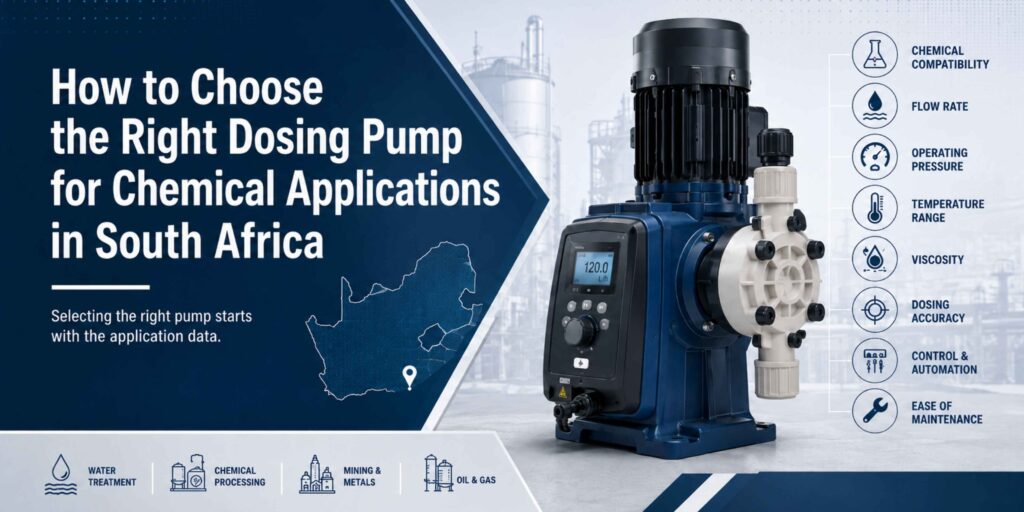
How to Choose the Right Dosing Pump for Chemical Applications in South Africa
Latest News
Request Engineering Consultation
If you’re looking for reliable, high-quality pumping and metering solutions for your business, look no further than PMPS.
What Is the Difference Between a Dosing Pump and a Metering Pump?
The terms are commonly used interchangeably. Both describe positive-displacement pumps that deliver controlled quantities of liquid. “Metering pump” generally emphasises measurable accuracy and repeatability, while “dosing pump” is commonly used for chemical addition in water treatment and industrial processes. PMPS groups these solutions within itschemical dosing and metering pump range.
How to Choose the Right Dosing Pump for Chemical Applications in South Africa
Choosing a dosing pump is not simply a matter of finding a model that can deliver the required litres per hour. The pump must suit the chemical, concentration, operating pressure, temperature, viscosity, dosing accuracy, control method, and maintenance conditions of the process.
A pump that looks suitable on a basic flow chart may perform poorly once it is connected to a long suction line, exposed to changing back pressure, or required to handle a chemical that is abrasive, corrosive, viscous or prone to releasing gas. Incorrect selection can lead to irregular dosing, blocked valves, damaged diaphragms, excessive wear, chemical waste, and avoidable plant downtime.
For engineers, plant managers, and procurement teams evaluating chemical dosing and metering pumps, the correct starting point is the application data, not a preferred brand or pump type.
Quick Answer: How Do You Choose the Right Dosing Pump?
The right dosing pump can deliver the minimum, normal, and maximum required flow against the total system pressure while remaining chemically compatible with the process fluid. It should also provide the required accuracy, work within a stable part of its operating range, and be supportable with suitable accessories, spares, and technical assistance.
Before selecting from PMPS’s range of industrial and water-treatment dosing pumps, confirm these eight factors:
- The exact chemical and concentration.
- The minimum, normal, and maximum dosing rate.
- The total discharge pressure.
- The chemical temperature, density, and viscosity.
- Whether the fluid contains solids or abrasive particles.
- The required dosing accuracy and turndown.
- The preferred manual or automated control method.
- Local maintenance, spare parts, and supplier support requirements.
There is no single dosing pump that is best for every chemical application. A compact solenoid pump may suit a low-flow water-treatment duty, while a mechanical diaphragm, hydraulic diaphragm, plunger, or peristaltic pump may be more appropriate for a demanding industrial process.
What Is a Dosing Pump, and What Does It Do?
A dosing pump is a positive-displacement pump that introduces a controlled quantity of liquid into a process. It normally operates by repeatedly drawing a measured volume into the pump head and discharging it into a pipeline, vessel, or treatment stream.
The terms dosing pump, dosage pump, metering pump, chemical injection pump, and dose pump are often used for similar equipment. “Metering pump” usually places greater emphasis on measurable, repeatable delivery, while “chemical injection pump” is common in applications where chemicals are introduced into pressurised lines.
Typical uses for dosing pumps in industrial applications include:
- pH correction using acids or alkalis;
- coagulant and flocculant dosing;
- chlorination and disinfection;
- corrosion- or scale-inhibitor injection;
- biocide dosing;
- polymer preparation and dosing;
- nutrient addition;
- Reagent dosing in mineral processing
- boiler- and cooling-water treatment;
- additive dosing in manufacturing; and
- process-chemical injection in oil, gas, and petrochemical operations.
A dosing pump is only one part of the chemical dosing process. The storage tank, suction arrangement, valves, instrumentation, injection point, controls, and pipework all influence whether the required dose reaches the process consistently.
Why Correct Dosing Pump Selection Matters
The purpose of chemical dosing is to achieve a controlled process outcome. This may be a target pH, disinfectant residual, chemical concentration, product formulation, or treatment result. If the pump cannot maintain the required dose, the entire process can become unstable.
PMPS’s chemical and petrochemical pumping solutions are designed around the realities of industrial chemical handling, where incorrect equipment selection can affect safety, product quality, and production continuity.
The consequences of choosing the wrong dosing pump may include:
- Under-dosing: The treatment objective is not achieved, resulting in poor water quality, insufficient disinfection, inadequate corrosion control, or an off-specification product.
- Over-dosing: Chemical is wasted, operating costs increase, and the process may move beyond its acceptable limits.
- Loss of prime: Air or gas prevents the pump head from filling, causing erratic or interrupted dosing.
- Premature wear: Abrasive solids, excessive speed, or incompatible materials damage valves, seals, diaphragms, or plungers.
- Leakage: Incorrect wetted materials or worn packing allow hazardous chemicals to escape.
- Blocked lines: Crystallising products, solids, or unsuitable pipe sizing restrict the suction or discharge path.
- Control instability: An oversized pump delivers too much chemical per stroke and continually overshoots the setpoint.
- Unplanned downtime: A pump fails, and suitable spares or technical support are not readily available.
Good selection reduces these risks by treating the pump as part of a complete engineered system rather than as an isolated item.
Eight Factors to Consider When Selecting a Dosing Pump
The following factors should be assessed together. Changing one can affect several others, which is why technical pump selection should be based on a complete application brief.
1. Chemical Compatibility
Every wetted component must be compatible with the exact chemical being handled. This includes the pump head, diaphragm or plunger, valve balls, valve seats, O-rings, seals, tubing, injection valve, foot valve, and system accessories.
PMPS’s range of chemical pumps includes different materials and technologies for corrosive, hazardous, and process-sensitive fluids, but material selection must still be based on the chemical’s concentration and operating temperature.
Do not select materials using only a broad chemical name. Sodium hypochlorite, sulphuric acid, or caustic soda, for example, may be supplied at different concentrations and temperatures. Compatibility may also change when cleaning fluids, contaminants, or other chemicals enter the same line.
The chemical’s Safety Data Sheet should be supplied during the selection process. Where the application is critical, the material recommendation should be confirmed against the pump manufacturer’s chemical-resistance information and the actual site conditions.
2. Required Flow Rate and Turndown
The pump must cover the full dosing range, not only the average flow. Establish the minimum, normal, and maximum litres per hour required under normal production, start-up, upset, and seasonal conditions.
The available solenoid dosing pumps may suit lower-flow applications requiring adjustable or proportional chemical delivery, while larger mechanical pumps may be required for greater capacities or continuous industrial duty.
A dosing pump should generally operate within a stable and controllable portion of its range. Selecting a pump that is much larger than the process requires can make low-flow dosing less consistent. A pump that is too small may run continuously at maximum output, leaving no allowance for process changes or performance losses.
The required flow can be established from process-water flow, target dose, chemical concentration, batch volume, or production rate. When the demand varies, the pump must provide sufficient turndown or receive a suitable control signal.
3. Dosing Accuracy and Repeatability
Accuracy describes how closely the delivered flow matches the intended dose. Repeatability describes how consistently the pump delivers the same result under the same conditions.
For applications requiring controlled, consistent metering, the OBL M-Series mechanical diaphragm pump is one example of a pump designed for adjustable and repeatable chemical delivery.
The required accuracy depends on the process. A basic tank make-up application may tolerate more variation than pH correction, chlorination, reagent addition, or product-formulation dosing.
Accuracy is influenced by more than the pump mechanism. It can also be affected by:
- Air entering the suction line
- Changing discharge pressure
- Worn or fouled check valves
- Pulsation
- Chemical viscosity
- Gas formation in the pump head
- Obstructed injection valve
- Calibration or control-signal errors
For critical duties, consider a calibration column, flow-verification device, back-pressure valve, and alarm logic rather than relying only on the pump’s nominal setting.
4. Total Operating Pressure
The dosing pump must overcome the total pressure at the required flow. This is not always the same as the pressure shown on the process gauge.
PMPS supplies process hydraulic diaphragm metering pumps for demanding process applications where pressure, accuracy, and containment may be important selection criteria.
The total discharge pressure may include:
- Pressure inside the receiving pipe or vessel
- Static elevation to the injection point
- Friction losses through tubing, fittings, and valves
- Injection-valve opening pressure
- Back-pressure-valve setting
- Resistance through instruments or accessories.
Suction conditions must also be checked. A pump may have enough discharge pressure but still perform poorly because the chemical cannot enter the liquid end quickly enough. Long, narrow suction tubing, excessive suction lift, low tank level, or high viscosity can all restrict filling.
5. Temperature, Density, and Viscosity
Chemical properties can change significantly with temperature. Some liquids become much more viscous during cold conditions, while higher temperatures may reduce the pressure or chemical-resistance limits of certain plastics and elastomers.
For difficult high-viscosity duties, the OBL R-Series plunger pumps include configurations developed for demanding metering applications, subject to confirming the fluid, pressure, and containment requirements.
Density affects the mass of chemical delivered for a given volumetric flow. Viscosity affects suction losses, valve response, pipe sizing, pump speed, and the ability of the pump head to fill fully between strokes.
Record the chemical properties at the lowest and highest expected operating temperatures. Selecting equipment only for room-temperature data can lead to poor cold-start performance or unexpected material limitations.
6. Solids, Abrasion, and Shear Sensitivity
A fluid containing suspended solids or abrasive particles can damage small valve components and wear the liquid end. A polymer or other shear-sensitive product may lose effectiveness if exposed to excessive agitation, recirculation, or high internal velocity.
PMPS’s peristaltic pump range can be considered for selected abrasive, viscous, solids-bearing, or shear-sensitive applications because the fluid is contained within the pump tube or hose.
The correct technology still depends on particle size, solids concentration, pressure, temperature, flow, and required hose life. For abrasive chemicals, establish an inspection and wear-component replacement plan. For products that settle, the tank and line design may need controlled agitation and flushing.
7. Manual or Automated Control
A manually adjusted pump may be sufficient where the required dose remains stable, and operators can verify the output. Automated control is preferable when chemical demand changes with flow, pH, conductivity, chlorine residual, or another process variable.
PMPS’s guide to actuator control versus variable-speed drive control provides additional context for selecting a suitable adjustment method for a metering or dosing application.
Possible control inputs include:
- 4–20 mA signals;
- pulses from a flow meter;
- pH or ORP measurements;
- conductivity;
- chlorine residual;
- tank level;
- batch commands; and
- PLC or SCADA instructions.
The complete control loop matters. A well-selected pump cannot correct an unreliable sensor, a poor sampling point, an incorrectly tuned controller, or a delayed process response.
8. Maintenance, Spares, and Local Support
Lifecycle cost includes more than the initial pump price. Review service intervals, access to the liquid end, expected wear parts, local stock availability, and the technical support required to commission and maintain the pump.
PMPS provides end-to-end pumping solutions that include equipment supply and support for engineered chemical dosing applications across South Africa and sub-Saharan Africa.
Before purchase, ask:
- Which components are considered routine wear parts?
- What spares should be kept on site?
- Can the pump be serviced without removing the complete unit?
- Is a standby pump recommended?
- How quickly are diaphragms, seals, valves, packing or hoses available?
- Is local commissioning or fault-finding support available?
- What training does the operating team require?
A technically suitable pump can still create operational risk when a minor component has a long replacement lead time.
Dosing Pump Selection Table
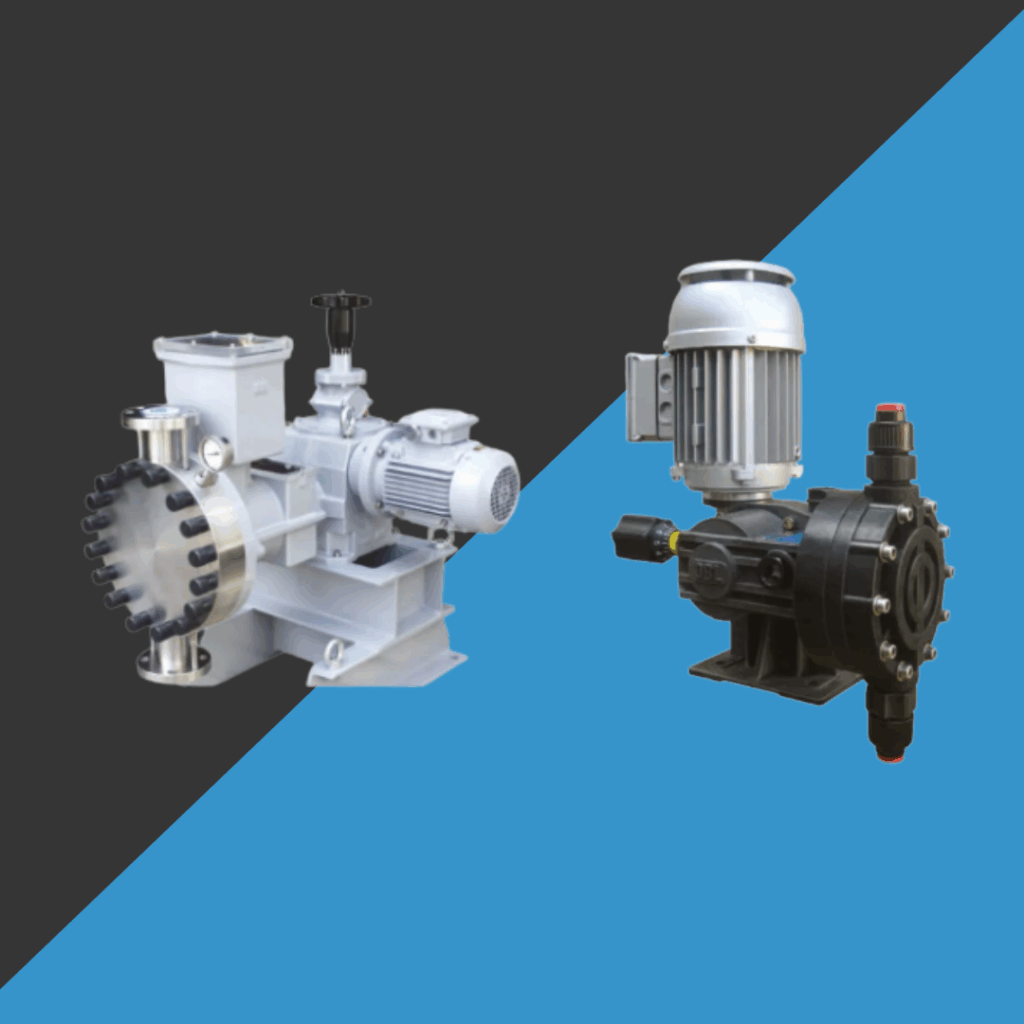
Use the following table as an initial guide before discussing the application with a technical supplier. PMPS’s broader dosing pump range includes several of these technologies.
| Application condition | Technology commonly considered | Main advantage | Selection caution |
| Low-flow water-treatment dosing | Solenoid diaphragm pump | Compact and easy to automate | Confirm pressure, flow range and gas-handling needs |
| Corrosive or hazardous chemical | Mechanical or hydraulic diaphragm pump | Chemical is separated from the drive | Verify every wetted material |
| High-pressure process injection | Hydraulic diaphragm or suitable plunger pump | Strong pressure capability | Assess containment, relief protection and installation standard |
| High-viscosity liquid | Suitable plunger, diaphragm, progressive-cavity or peristaltic pump | Better handling when correctly configured | Suction-line size, speed and temperature are critical |
| Abrasive or solids-bearing fluid | Peristaltic or application-specific pump | Can reduce dependence on small check valves | Plan for wear inspection and hose or component replacement |
| Shear-sensitive polymer | Progressive-cavity or peristaltic technology | Lower-shear handling may protect the product | Avoid excessive speed and recirculation |
| Variable chemical demand | Controlled solenoid, diaphragm or digital dosing pump | Output can follow a process signal | Confirm turndown and control compatibility |
| Several dosing streams | Multi-head metering pump or packaged system | Consolidates multiple duties | Each head still requires independent sizing and material checks |
| Remote chemical injection | Solar or low-power chemical injection system | Supports sites with limited electrical infrastructure | Confirm autonomy, storage, controls, and environmental conditions |
This comparison is a starting point, not a final specification. The chemical data, pressure, flow, and installation arrangement must still be reviewed.
Comparing the Main Dosing Pump Technologies
Understanding the differences between pump types helps narrow the options before detailed sizing.
Solenoid Dosing Pumps
A solenoid dosing pump uses an electromagnetic drive to move a diaphragm. These pumps are often compact and well-suited to lower-flow chemical dosing where electrical adjustment, pulse control or proportional dosing is required.
PMPS supplies solenoid dosing pumps for industrial water treatment across a range of control and application requirements.
They may be suitable for disinfection, pH correction, inhibitor dosing and similar duties. Confirm that the selected model can achieve the required flow against the actual back pressure and that the chemical does not create persistent priming or gas-lock problems.
Mechanical Diaphragm Dosing Pumps
A mechanical diaphragm pump flexes a diaphragm through a mechanical drive. The diaphragm separates the chemical from the drive mechanism, making this technology useful for many corrosive and industrial chemicals.
The mechanical diaphragm dosing pump category includes equipment for controlled industrial and water-treatment dosing.
These pumps are often selected for reliable continuous duty at moderate flows and pressures. The diaphragm, pump-head and valve materials must be compatible with the chemical, and the system should include appropriate relief and back-pressure protection.
Hydraulic Diaphragm Dosing Pumps
In a hydraulic diaphragm pump, hydraulic fluid transmits movement to the process diaphragm. This arrangement is frequently considered for demanding duties where higher pressure, robust containment or additional diaphragm-protection features are required.
The hydraulic diaphragm dosing pump range is relevant to process-critical and demanding industrial applications.
Hydraulic diaphragm technology can be suitable for hazardous, corrosive or high-pressure chemicals, but the final choice depends on the required standard, process risk and maintenance philosophy.
Plunger Dosing Pumps
A plunger pump moves the chemical using a reciprocating plunger that passes through a packed sealing arrangement. It can provide accurate delivery at high pressure and may be suitable for selected viscous fluids.
PMPS’s plunger dosing pumps include industrial solutions for applications where the process conditions suit this technology.
Because the plunger passes through the packing, leakage risk and packing wear must be evaluated. This is particularly important for hazardous, highly corrosive or environmentally sensitive chemicals.
Peristaltic Pumps
A peristaltic pump compresses a flexible tube or hose to move the fluid. The chemical contacts the tube or hose rather than the pump’s mechanical components.
The PMPS peristaltic dosing pump range may suit selected abrasive, viscous, shear-sensitive or solids-bearing products.
Advantages can include dry-running tolerance in some designs, simple fluid containment and no conventional check valves. The hose remains a wear component, so pressure, speed, chemical compatibility and replacement intervals must be considered.
Choosing Dosing Pumps for High-Viscosity and Abrasive Chemicals
High-viscosity and abrasive fluids place additional demands on chemical dosing equipment. The challenge is not only moving the product; it is filling the pump consistently, avoiding blockages and controlling wear.
PMPS’s process-engineered media pump range should be reviewed where a standard water-like chemical dosing configuration is not suitable.
Why Viscosity Changes Pump Performance
As viscosity rises, friction losses through the suction pipe, valves and fittings increase. The pump head may not fill completely before the discharge stroke, especially when the pump runs quickly or draws from a long suction line. High-viscosity configurations within the OBL R-Series plunger pump range illustrate why the fluid’s actual viscosity must form part of model selection.
Temperature must be included in the assessment because many liquids thicken when they cool. A pump selected using warm laboratory data may underperform outdoors or during winter start-up.
Practical design measures include:
- placing the pump close to the chemical tank;
- using a flooded suction arrangement where safe;
- increasing suction-line diameter;
- reducing elbows and restrictions;
- operating at a lower pump speed;
- using larger, suitable valve arrangements;
- preventing cold spots in the line; and
- considering controlled heating when appropriate.
Why Abrasion Changes Maintenance Requirements
Abrasive particles can wear valve balls, seats, diaphragms, plungers, packing, hoses and injection fittings. Wear may initially appear as reduced accuracy or loss of prime before a complete failure occurs.
For suitable applications, a peristaltic pump may reduce the number of small wetted valve components exposed to solids. However, hose wear must be monitored and matched to the chemical and pressure.
The system should provide access for inspection, flushing and component replacement. Where solids settle, tank agitation and line velocity must be designed carefully so that the product remains consistent without suffering excessive shear.
Manual Dosing Versus Automated Dosing
The control method should match how quickly and how widely the process demand changes.
A simple manually adjusted pump may be sufficient for a stable duty. A variable process usually benefits from a pump or packaged system that can respond to a flow signal, instrument reading or control command.
PMPS’s pumping instrumentation range can support measurement and control within an integrated dosing installation.
| Manual dosing may suit | Automated dosing may suit |
| Stable process flow | Variable process flow |
| Fixed batch additions | Continuous proportional dosing |
| Non-critical adjustment | Tight pH, residual or concentration control |
| Frequent operator verification | Remote or unattended operation |
| Simple local installation | PLC or SCADA integration |
| Limited process variation | Multi-variable control and alarm requirements |
Automation should include sensible failure responses. Consider what the system must do after loss of flow signal, low tank level, high pressure, leak detection or instrument failure. The safest response may be to stop the pump, hold the last output or trigger a controlled fallback, depending on the process.
Do Not Specify the Pump Without the Dosing System
Even the correct dosing pump can perform poorly when installed with unsuitable accessories or pipework.
PMPS designs and manufactures custom chemical dosing systems that can combine the pump, tank, pipework, valves, instruments and controls into an integrated solution.
A complete chemical dosing system may require:
- a chemical storage or day tank;
- bunding or secondary containment;
- a suction lance or foot valve;
- a low-level switch;
- a calibration column;
- a pressure-relief valve;
- a back-pressure valve;
- a pulsation dampener;
- pressure indication;
- flow verification;
- an injection valve;
- isolation, drain and flushing valves;
- a mixer or agitator;
- leak detection;
- a local control panel; and
- a skid or support structure.
The PMPS installation and accessories guide can help identify components that may be required around the pump.
Accessories should be sized and selected for the same chemical, flow, temperature and pressure conditions as the pump. A single undersized valve or incompatible seal can compromise the full system.
Practical Dosing Pump Selection Checklist
Use this checklist before approaching dosing pump suppliers in South Africa. Providing complete information allows the supplier to make a more accurate technical recommendation and quotation.
Chemical Data
Review the fluid against the available chemical pump technologies and record:
- Chemical name and trade name.
- Concentration or dilution.
- Safety Data Sheet.
- Minimum and maximum chemical temperature.
- Density or specific gravity.
- Viscosity across the operating temperature range.
- Solids concentration and maximum particle size.
- Corrosive, abrasive, toxic or flammable properties.
- Tendency to crystallise, settle, foam or release gas.
- Cleaning or flushing chemicals that may contact the pump.
Process Data
Use the required duty to narrow the relevant industrial dosing pump category and record:
- Minimum, normal and maximum required flow.
- Required accuracy and repeatability.
- Continuous, intermittent or batch duty.
- Normal and maximum process pressure.
- Injection-point location and pressure.
- Required turndown.
- Expected operating hours.
- Consequence of pump failure or interrupted dosing.
Installation Data
Consult the installation and dosing-accessories guidance while recording:
- Distance from tank to pump.
- Flooded suction or suction lift.
- Vertical elevation to the injection point.
- Proposed suction and discharge pipe sizes.
- Indoor, outdoor or hazardous-area location.
- Ambient temperature and weather exposure.
- Available electrical supply.
- Available control signal.
- Space and access for maintenance.
Support and Maintenance Data
Clarify the level of ongoing assistance required from an end-to-end pumping solutions provider and record:
- Required commissioning assistance.
- Operator training requirements.
- Recommended critical spares.
- Planned service interval.
- Need for a duty-and-standby arrangement.
- Local support and repair expectations.
- Documentation and test requirements.
Common Dosing Pump Selection Mistakes
Many dosing problems can be traced back to incomplete application data rather than a defective pump. PMPS’s frequently asked questions provide further guidance on the information required for pump selection and support.
Avoid these common mistakes:
Selecting by flow alone
A pump may deliver the required litres per hour at low pressure but not at the actual system pressure.
Ignoring the minimum dose
An oversized pump may struggle to provide smooth, controllable delivery at the bottom of its range.
Using a generic chemical-compatibility assumption
Concentration, temperature and impurities can change which materials are suitable.
Treating water-test performance as chemical performance
A viscous or gas-forming product may behave very differently from water.
Using undersized suction tubing
The pump cannot meter accurately when the liquid end does not fill completely.
Leaving out a relief or back-pressure valve
Positive-displacement pumps and low-pressure injection points may require appropriate protection and pressure control.
Failing to plan for wear components
A low-cost installation can create expensive downtime when basic spares are unavailable.
Separating pump selection from control design
The pump, sensor, controller and process dynamics must work as one loop.
Why Local Supplier Support Matters in South Africa
For industrial chemical applications, supplier capability should be assessed alongside pump technology. Local support can affect commissioning quality, spare parts lead times and the speed at which a dosing problem is diagnosed.
PMPS is an authorised African distributor of OBL metering pumps and provides support for individual pumps as well as complete dosing and pumping systems.
A suitable supplier should be able to:
- review the chemical and Safety Data Sheet;
- validate flow and pressure calculations;
- Recommend wetted materials;
- assess suction and injection conditions;
- identify required accessories;
- assist with control and instrumentation;
- provide system drawings or packaged solutions where required;
- support installation and commissioning;
- supply maintenance parts; and
- help investigate performance problems.
This is particularly important for critical plant duties, remote sites and applications where chemical leakage or loss of dosing could affect safety, production or environmental performance.
Choosing the Right Dosing Pump the Final Recommendation
Start with a complete process and chemical data sheet. Use it to shortlist the pump technology, then verify the materials, capacity, pressure, control method and system accessories with a technical supplier.
PMPS can assess applications ranging from an individual chemical injection pump to a complete packaged dosing installation. The company’s custom-designed dosing and pumping solutions can incorporate pumps, pipework, valves, instruments and controls according to the site requirement.
The correct pump should:
- deliver the required flow across the full operating range;
- overcome the total system pressure;
- remain compatible with the chemical;
- provide the necessary accuracy;
- handle viscosity, solids and gas behaviour;
- integrate with the required controls;
- be maintainable with available parts; and
- be supported throughout its operating life.
To discuss a new application or replacement pump, request a tailored quotation from PMPS.
Frequently Asked Questions About Dosing Pumps
How Do I Calculate the Required Dosing Pump Capacity?
Determine the process flow, required chemical dose and concentration of the prepared chemical solution. Convert this into a minimum, normal and maximum volumetric flow, then confirm the pump’s output at the actual discharge pressure. A technical supplier can validate the calculation when you request a dosing pump quotation and provide the relevant process data.
Which Dosing Pump Is Best for Corrosive Chemicals?
A diaphragm dosing pump with chemically compatible wetted materials is often considered because the diaphragm separates the chemical from the drive. However, no technology or material is universally suitable. Review the exact chemical, concentration, temperature and pressure before choosing from mechanical diaphragm dosing pumps or another appropriate technology.
Which Pump Can Dose High-Viscosity or Abrasive Chemicals?
The suitable technology may be a specially configured diaphragm, plunger, progressive-cavity or peristaltic pump. Selection depends on viscosity at operating temperature, particle size, abrasiveness, required pressure, shear sensitivity and flow. PMPS’s process-engineered media pumps provide a starting point for applications beyond conventional water-like fluids.
Should a Dosing Pump Be Manually Controlled or Automated?
Manual control can suit a stable process with regular operator checks. Automated dosing is generally better where chemical demand varies with flow, pH, conductivity, chlorine residual or another process measurement. The pump and pumping instrumentation should be selected as one control system.
What Information Should I Give a Dosing Pump Supplier?
Provide the chemical name, concentration, Safety Data Sheet, temperature, density, viscosity, solids content, required flow range, operating pressure, suction conditions, duty cycle, available power, control signal and installation environment. PMPS’s contact page can be used to discuss the application before a final pump or packaged-system recommendation is made.
Quick Specification Highlight
-
Designed for precise chemical injection in industrial processes such as pH correction, disinfection, coagulation/flocculation, corrosion inhibition, scale control, polymer dosing, and general process conditioning.
-
System selection should be based on flow rate and dosing range, operating pressure, chemical properties, solids content, and hazard classification.
-
Typical pump options include diaphragm metering pumps, hydraulic diaphragm pumps, peristaltic pumps, and plunger/piston metering pumps, depending on the duty and chemical characteristics.
-
A complete dosing skid typically includes chemical storage tanks, agitators/mixers, suction pipework, duty and standby pumps, discharge pipework, pulsation dampeners, back-pressure and relief valves, calibration columns, flow meters, instrumentation, electrical panels, and bunded containment.
-
Suitable for sectors including water and wastewater treatment, mining and mineral processing, and broader industrial applications, with SCADA integration possible on modern dosing skids.

What is a chemical dosing system?
A chemical dosing system is a controlled arrangement of equipment designed to inject precise quantities of chemicals into a process stream. These systems are widely used for:
- pH correction
- Disinfection and oxidation
- Coagulation and flocculation
- Corrosion inhibition
- Scale control
- Polymer dosing
- Process conditioning in industrial manufacturing
In industrial environments, dosing systems must operate reliably across fluctuating flows, pressures, temperatures, and chemical concentrations. This is why system design and pump selection are as important as the chemical itself.
PMPS designs and supplies engineered dosing solutions across multiple sectors, including water and wastewater treatment, mining, and heavy industry, with a focus on reliability, safety, and maintainability. PMPS
Key factors that determine dosing system selection
Before comparing pump technologies, engineers should evaluate the following process variables:
Flow rate and dosing range
The required dosing rate must be matched to a pump that can operate accurately across both minimum and maximum demand. Oversized pumps reduce accuracy at low flows, while undersized pumps struggle under peak conditions.
Operating pressure
Discharge pressure influences pump selection and system layout. High-pressure applications require technologies that maintain accuracy without excessive wear or leakage.
Chemical properties
Viscosity, abrasiveness, temperature sensitivity, and chemical aggressiveness all affect pump performance and material selection.
Solids content
Some chemicals contain suspended solids or crystallise over time, requiring pumps that can tolerate particulate matter without clogging.
Hazard classification
Corrosive, toxic, or hazardous chemicals require containment, leak protection, and compliant materials to ensure operator safety and environmental protection.
Overview of common chemical dosing pump technologies
Different pump technologies are suited to different industrial applications. Understanding their strengths and limitations is essential for correct selection.
Diaphragm metering pumps
Diaphragm pumps are widely used for chemical dosing due to their accuracy, leak-free operation, and compatibility with aggressive chemicals.
Best suited for:
- Medium to high accuracy applications
- Hazardous or corrosive chemicals
- Continuous industrial operation
They isolate the chemical from mechanical components, reducing leak risk and improving safety.
Hydraulic diaphragm pumps
Hydraulic diaphragm pumps are an advanced form of diaphragm technology, using hydraulic fluid to drive the diaphragm evenly across each stroke. This results in superior accuracy and extended diaphragm life.
Best suited for:
- High-pressure applications
- Critical dosing points
- Municipal and industrial water treatment
- Chemicals requiring consistent, repeatable dosing

Peristaltic pumps
Peristaltic pumps move chemicals through a flexible hose using a rotating roller mechanism. They are simple and tolerant of abrasive or viscous fluids.
Best suited for:
- Slurries and abrasive chemicals
- Low-pressure applications
- Intermittent dosing
Limitations include hose wear and reduced accuracy at higher pressures.
Plunger (piston) metering pumps
Plunger pumps deliver high pressures and are mechanically robust, but they expose seals and packing to the chemical.
Best suited for:
- High-pressure injection
- Clean, non-hazardous chemicals
They are less suitable for corrosive or toxic chemicals unless additional containment measures are implemented.

Why system design matters as much as pump selection
Even the best dosing pump will perform poorly if installed in a poorly designed system. Industrial dosing reliability depends on the complete system layout.
Essential components of a chemical dosing skid
A properly engineered chemical dosing skid typically includes:
- Chemical storage tanks
- Agitators or mixers (where required)
- Suction pipework and strainers
- Dosing pumps (duty and standby)
- Discharge pipework and injection points
- Pulsation dampeners
- Back-pressure and relief valves
- Calibration columns
- Flow meters and instrumentation
- Electrical panels and control interfaces
- Bunded containment
PMPS specialises in custom chemical dosing skids, engineered as complete systems rather than individual components.
Bunding and containment requirements
Not all dosing systems legally require bunded containment, but in practice, bunding is strongly recommended for most industrial chemical applications.
Bunding protects against:
- Chemical spills and leaks
- Environmental contamination
- Operator exposure
- Regulatory non-compliance
For corrosive, toxic, or environmentally hazardous chemicals, bunded skids are considered best practice and are often mandatory under site-specific safety regulations.
Polymer dosing and preparation considerations
Polymer dosing presents unique challenges due to viscosity, ageing, and sensitivity to shear. Poor polymer preparation leads to inconsistent dosing, blockages, and ineffective treatment.
Polymer preparation plants ensure:
- Correct dilution ratios
- Consistent solution quality
- Stable viscosity for accurate dosing
- Reduced operator intervention
PMPS polymer preparation systems are designed to integrate seamlessly with dosing skids and downstream processes.
Application examples across industries
Mining and mineral processing
Chemical dosing systems are used for flocculation, pH correction, and water recovery. Systems must tolerate abrasive environments and variable operating conditions.
Industrial wastewater treatment
Accurate dosing is critical for compliance, sludge management, and cost control. Systems must integrate with flow-based control and SCADA platforms.
Potable water treatment
Reliability and safety are paramount. Leak-free pump technologies, redundant configurations, and precise control are essential.
PMPS supports these sectors through its water and wastewater industry solutions.
The value of custom-built PMPS dosing skids
Off-the-shelf dosing systems often fail to account for site-specific challenges such as space constraints, chemical variability, or integration requirements.
Custom PMPS dosing skids offer:
- Correct pump technology selection
- Optimised layout for maintenance access
- Integrated safety and containment
- Compatibility with existing plant infrastructure
- Long-term reliability and reduced lifecycle cost
By engineering each skid to suit the application, PMPS helps clients avoid costly retrofits and operational inefficiencies.
Final thoughts
Selecting the right chemical dosing system is a strategic engineering decision with long-term operational consequences. By evaluating process conditions, chemical characteristics, and system requirements holistically, engineers can specify dosing solutions that deliver accuracy, safety, and durability.
Custom-engineered chemical dosing skids provide the flexibility and reliability required in modern industrial environments, particularly where compliance, uptime, and cost control are critical.
Definition Block
Chemical dosing system
A chemical dosing system is a controlled setup of equipment designed to inject precise quantities of chemicals into a process stream for tasks such as pH correction, disinfection, flocculation, corrosion inhibition, scale control, and polymer dosing.
Dosing skid
A dosing skid is a complete engineered dosing package that typically includes storage tanks, pumps, pipework, valves, calibration equipment, instrumentation, control panels, and containment, all arranged as one integrated system.
Hydraulic diaphragm pump
A hydraulic diaphragm pump is a dosing pump that uses hydraulic fluid to move the diaphragm evenly on each stroke, helping deliver more accurate, repeatable dosing and longer diaphragm life, especially in high-pressure or critical applications.
Bunded containment
Bunded containment is a protective containment area built around chemical equipment or storage to help prevent spills, operator exposure, environmental contamination, and possible non-compliance.
Polymer dosing
Polymer dosing is the controlled addition of polymer chemicals into a process, usually where correct dilution, stable viscosity, and careful preparation are important to avoid blockages and inconsistent treatment performance.
Frequently Asked Questions
How do I decide which pump technology is right for my chemical dosing application
Pump selection depends on flow rate, pressure, chemical aggressiveness, viscosity, solids content, and safety requirements. Hydraulic diaphragm pumps are often preferred for critical or hazardous applications.
What are the essential components of a chemical dosing skid?
A dosing skid typically includes storage tanks, pumps, valves, calibration equipment, containment, instrumentation, and control systems.
Do all chemical dosing systems require bunded containment?
Not always, but bunding is recommended for most industrial chemicals and may be mandatory depending on safety and environmental regulations.
How do I size a chemical dosing pump correctly for my process
Pumps should be sized to operate within their optimal accuracy range under both minimum and maximum dosing conditions.
Can an existing plant integrate a new chemical dosing skid with SCADA?
Yes. Most modern dosing skids are designed for straightforward SCADA integration using standard signals and communication protocols.