


...
Hydraulic vs Mechanical Diaphragm Dosing Pumps: How to Choose by Application
Blog /
Hydraulic vs Mechanical Diaphragm Dosing Pumps: How to Choose by Application
Latest News
Request Engineering Consultation
If you’re looking for reliable, high-quality pumping and metering solutions for your business, look no further than PMPS.
Overview
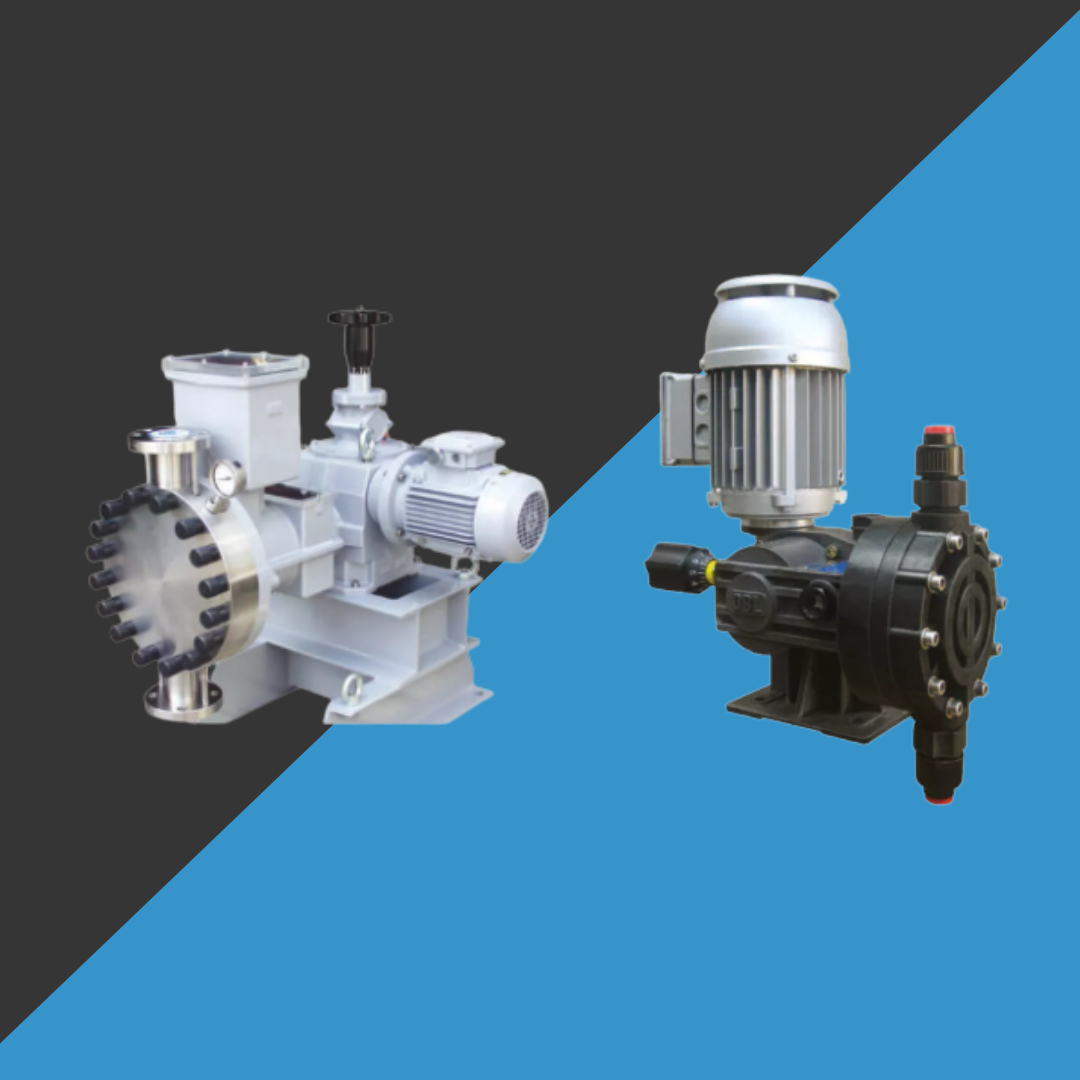
Choosing the optimal dosing pump for your application, whether a hydraulic diaphragm dosing pump or a mechanical diaphragm dosing pump, is essential for reliable dosing systems South Africa. This diaphragm dosing pump comparison helps you select based on criteria like pressure, media hazards, and lifecycle cost. Hydraulic diaphragm dosing pumps use a sealed hydraulic fluid barrier to move the diaphragm and deliver precise metering at elevated pressures. Mechanical diaphragm pumps use a direct-drive linkage to move the diaphragm and are optimised for low-to-medium pressure applications with simpler maintenance. Choosing the right technology depends on pressure, media hazards, accuracy requirements, lifecycle cost, and maintenance capability. For hazardous or high-pressure dosing, hydraulic pumps offer superior containment and reliability; for clean water, polymers, and general industrial dosing at lower pressures, mechanical pumps are the cost-effective workhorse.
Understanding Diaphragm Dosing Pumps
Diaphragm dosing pumps are positive-displacement pumps that meter a repeatable volume per stroke through a flexible diaphragm. The diaphragm creates a sealed barrier between the process fluid and the drive mechanism, reducing the risk of leaks and protecting critical parts from corrosion and wear. This isolation is a key reason diaphragm metering is widely adopted in water treatment, chemical processing, and other industrial plants.
At PMPS, we design, manufacture, and install complete Packaged Metering Systems and supply a broad Dosing Systems range tailored to Southern African conditions and standards, including OBL metering pumps and custom skids engineered for reliability, safety, and lifecycle value.
Tip: When comparing options, focus on required discharge pressure, chemical compatibility, accuracy tolerance (±%), turndown range, available maintenance skills, and spares lead times.
What is a Hydraulic Diaphragm Dosing Pump?
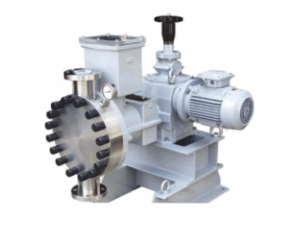
A hydraulic diaphragm dosing pump uses hydraulic oil as an intermediary between the drive and the diaphragm. The hydraulic chamber distributes load evenly across the diaphragm, improving accuracy and extending diaphragm life. Hydraulic heads often include pressure-relief protection and diaphragm rupture detection to prevent cross-contamination and provide early failure warnings.
Key benefits
- High-pressure capability with stable accuracy under load—ideal when backpressure varies. PMPS’s OBL XL configurations list pressures up to 200 bar, depending on model and setup.
- Leak-tight safety for hazardous, flammable, or toxic media; sandwich/multi-layer diaphragms with monitoring are common in safety-critical duties.
- Accuracy & reliability—hydraulic pressure compensation helps maintain metering precision over time.
- Lifecycle value—long diaphragm life and built-in protection features reduce unplanned downtime.
Typical applications
- Aggressive/toxic chemical dosing in refineries and chemical plants
- High-pressure injection (e.g., antiscalants, inhibitors)
- Critical utilities where leakage cannot be tolerated
Explore: OBL XL Hydraulic Diaphragm Pumps
What is a Mechanical Diaphragm Dosing Pump?
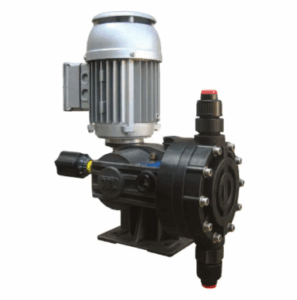
A mechanical diaphragm dosing pump uses a direct mechanical linkage (e.g., cam or eccentric) to flex the diaphragm. The design is compact, energy-efficient, and simple to service, making it a favourite for municipal and general industrial plants.
Key benefits
- Cost-effective for low-to-medium pressures (commonly ~ 6–10 bar; some models up to ~25 bar at low flow).
- Easy maintenance—diaphragm and valves are readily accessible; minimal specialised tooling
- Compact footprint suited to skids and modular plant layouts
- Sufficient accuracy for water treatment chemicals, polymers, and neutral/low-viscosity media.
Typical applications
- Municipal water and wastewater dosing (e.g., coagulants, polymers, pH control)
- Cooling water and general utilities
- Low-viscosity, non-hazardous chemicals
Hydraulic vs Mechanical
Hydraulic diaphragm pump
- Pressure range: typically high; OBL XL configs up to ~200 bar (model-dependent)
- Typical media: aggressive, toxic, or otherwise hazardous chemicals
- Accuracy under backpressure: excellent (hydraulic compensation keeps dosing stable)
- Maintenance: infrequent; hydraulic seals and built-in monitoring help extend life
- Applications: high-pressure industrial and chemical dosing, critical safety duties
- Relative cost: higher CAPEX, strong OPEX value over lifecycle
Mechanical diaphragm pump
- Pressure range: low to medium; commonly 6–10 bar, up to ~25 bar on some low-flow models
- Typical media: neutral/light chemicals, water, polymers
- Accuracy under backpressure: good at lower pressures and flows
- Maintenance: simple; easy access to the diaphragm and valves
- Applications: general dosing and water/wastewater treatment
- Relative cost: lower CAPEX; straightforward, economical upkeep
How to Select the Right Pump for Your Application
Use this quick decision framework:
- Required Discharge Pressure
- 25–30 bar or highly variable backpressure → lean hydraulic.
- ≤10–15 bar steady service → mechanical is usually sufficient.
- Fluid Properties & Safety
- Hazardous, flammable, or toxic media; zero-leak tolerance → hydraulic with double/sandwich diaphragm and rupture detection.
- Neutral/low-viscosity media (e.g., polymers for dewatering) → mechanical is pragmatic.
- Accuracy & Control
- Tight accuracy under fluctuating conditions, need for pressure compensation → hydraulic.
- Routine dosing where ±1–3% steady-state accuracy is acceptable → mechanical or hydraulic based on pressure.
- Lifecycle Cost & Maintainability
- Limited maintenance windows, critical uptime → hydraulic (long diaphragm life, monitoring).
- In-house team comfortable with routine diaphragm/valve service → mechanical.
- Compliance & Standards
- Where ATEX/API675 compliance or documented safety layers are required (certain chemical/process plants) → hydraulic families frequently offer these options.
Next steps with PMPS
- Review packaged options: Packaged Metering Systems
- Evaluate products: OBL XL Hydraulic Diaphragm Pumps and OBL M Mechanical Diaphragm Pumps
- Browse broader range: Dosing Systems
PMPS Recommendation & Technical Support
Both technologies are proven. PMPS supplies, installs, and maintains both hydraulic and mechanical diaphragm dosing pumps, and our engineering team will recommend the optimal configuration after reviewing your process data (fluid, pressure, temperature, accuracy, materials, control philosophy).
Fast guidance
- Pick hydraulic for high pressure, hazardous media, or tight accuracy with variable backpressure.
- Pick mechanical for low-pressure water/polymer duties where simplicity and footprint matter most.
Speak to our engineers to determine the right dosing technology for your process. Start here: Packaged Metering Systems
Frequently Asked Questions
What is the difference between hydraulic and mechanical diaphragm dosing pumps?
Hydraulic pumps use a hydraulic oil chamber to move the diaphragm, providing even load distribution, better accuracy under pressure, and features like pressure relief and rupture monitoring. Mechanical pumps use a direct cam/eccentric to flex the diaphragm; they’re simpler, compact, and ideal for low-to-medium pressure duties. Choose hydraulic for hazardous/high-pressure service; mechanical for clean, lower-pressure dosing such as municipal water and polymers.
Which dosing pump is best for high-pressure applications?
Hydraulic diaphragm pumps. The OBL XL family, as supplied by PMPS, lists configurations up to 200 bar, while many mechanical diaphragm pumps are designed for low-to-medium pressure, often around 6–10 bar, with certain low-flow models reaching ~25 bar. Validate against your exact duty conditions and data sheet.
Are hydraulic diaphragm pumps safer for hazardous chemicals?
Yes. Hydraulic heads often incorporate sandwich/multi-layer diaphragms with continuous monitoring/rupture detection that helps prevent cross-contamination and provides early warning of membrane damage, important where leaks are unacceptable (e.g., toxic, flammable, or environmentally sensitive chemicals).
How do I size and select the right diaphragm dosing pump?
Start with (a) discharge pressure (normal + maximum), (b) required flow across the control range, (c) fluid properties (viscosity, solids, corrosivity, toxicity), (d) materials (e.g., AISI 316, PVC, PVDF, Hastelloy), (e) accuracy/turndown targets, (f) ambient and fluid temperatures, and (g) control method (manual, 4–20 mA, VFD, pulse). For high-pressure or hazardous media, specify hydraulic heads with appropriate monitoring. PMPS can model duty points and recommend an OBL XL (hydraulic) or OBL M (mechanical) configuration to suit.
What does “diaphragm rupture detection” mean, and do I need it?
Rupture detection monitors the integrity of a double/sandwich diaphragm. If the process-side membrane fails, the system detects a pressure or conductivity change in the interstitial space and triggers an alarm, allowing controlled shutdown or switchover. It’s strongly recommended for hazardous fluids, critical dosing points, or where any cross-contamination would be costly or unsafe.
Choosing the Right Dosing Technology
Selecting between a hydraulic vs mechanical diaphragm pump ultimately depends on your application’s pressure requirements, chemical characteristics, and performance expectations. Choose a hydraulic diaphragm pump when dealing with high-pressure, hazardous, or critical accuracy applications where leak prevention, safety, and reliability are non-negotiable. Opt for a mechanical diaphragm pump for low-pressure, non-aggressive, or general water and polymer dosing systems where cost-efficiency and easy maintenance matter most.
At PMPS, we don’t just sell pumps; we engineer complete dosing solutions that deliver long-term value, operational safety, and process efficiency. Our specialists can help you assess your plant conditions, specify the ideal configuration, and design a system that meets both performance and compliance standards.
Explore our full range of Dosing Systems or speak to our engineers today to find the best dosing technology for your operation.
Quick Specification Highlight
-
Designed for precise chemical injection in industrial processes such as pH correction, disinfection, coagulation/flocculation, corrosion inhibition, scale control, polymer dosing, and general process conditioning.
-
System selection should be based on flow rate and dosing range, operating pressure, chemical properties, solids content, and hazard classification.
-
Typical pump options include diaphragm metering pumps, hydraulic diaphragm pumps, peristaltic pumps, and plunger/piston metering pumps, depending on the duty and chemical characteristics.
-
A complete dosing skid typically includes chemical storage tanks, agitators/mixers, suction pipework, duty and standby pumps, discharge pipework, pulsation dampeners, back-pressure and relief valves, calibration columns, flow meters, instrumentation, electrical panels, and bunded containment.
-
Suitable for sectors including water and wastewater treatment, mining and mineral processing, and broader industrial applications, with SCADA integration possible on modern dosing skids.

What is a chemical dosing system?
A chemical dosing system is a controlled arrangement of equipment designed to inject precise quantities of chemicals into a process stream. These systems are widely used for:
- pH correction
- Disinfection and oxidation
- Coagulation and flocculation
- Corrosion inhibition
- Scale control
- Polymer dosing
- Process conditioning in industrial manufacturing
In industrial environments, dosing systems must operate reliably across fluctuating flows, pressures, temperatures, and chemical concentrations. This is why system design and pump selection are as important as the chemical itself.
PMPS designs and supplies engineered dosing solutions across multiple sectors, including water and wastewater treatment, mining, and heavy industry, with a focus on reliability, safety, and maintainability. PMPS
Key factors that determine dosing system selection
Before comparing pump technologies, engineers should evaluate the following process variables:
Flow rate and dosing range
The required dosing rate must be matched to a pump that can operate accurately across both minimum and maximum demand. Oversized pumps reduce accuracy at low flows, while undersized pumps struggle under peak conditions.
Operating pressure
Discharge pressure influences pump selection and system layout. High-pressure applications require technologies that maintain accuracy without excessive wear or leakage.
Chemical properties
Viscosity, abrasiveness, temperature sensitivity, and chemical aggressiveness all affect pump performance and material selection.
Solids content
Some chemicals contain suspended solids or crystallise over time, requiring pumps that can tolerate particulate matter without clogging.
Hazard classification
Corrosive, toxic, or hazardous chemicals require containment, leak protection, and compliant materials to ensure operator safety and environmental protection.
Overview of common chemical dosing pump technologies
Different pump technologies are suited to different industrial applications. Understanding their strengths and limitations is essential for correct selection.
Diaphragm metering pumps
Diaphragm pumps are widely used for chemical dosing due to their accuracy, leak-free operation, and compatibility with aggressive chemicals.
Best suited for:
- Medium to high accuracy applications
- Hazardous or corrosive chemicals
- Continuous industrial operation
They isolate the chemical from mechanical components, reducing leak risk and improving safety.
Hydraulic diaphragm pumps
Hydraulic diaphragm pumps are an advanced form of diaphragm technology, using hydraulic fluid to drive the diaphragm evenly across each stroke. This results in superior accuracy and extended diaphragm life.
Best suited for:
- High-pressure applications
- Critical dosing points
- Municipal and industrial water treatment
- Chemicals requiring consistent, repeatable dosing

Peristaltic pumps
Peristaltic pumps move chemicals through a flexible hose using a rotating roller mechanism. They are simple and tolerant of abrasive or viscous fluids.
Best suited for:
- Slurries and abrasive chemicals
- Low-pressure applications
- Intermittent dosing
Limitations include hose wear and reduced accuracy at higher pressures.
Plunger (piston) metering pumps
Plunger pumps deliver high pressures and are mechanically robust, but they expose seals and packing to the chemical.
Best suited for:
- High-pressure injection
- Clean, non-hazardous chemicals
They are less suitable for corrosive or toxic chemicals unless additional containment measures are implemented.

Why system design matters as much as pump selection
Even the best dosing pump will perform poorly if installed in a poorly designed system. Industrial dosing reliability depends on the complete system layout.
Essential components of a chemical dosing skid
A properly engineered chemical dosing skid typically includes:
- Chemical storage tanks
- Agitators or mixers (where required)
- Suction pipework and strainers
- Dosing pumps (duty and standby)
- Discharge pipework and injection points
- Pulsation dampeners
- Back-pressure and relief valves
- Calibration columns
- Flow meters and instrumentation
- Electrical panels and control interfaces
- Bunded containment
PMPS specialises in custom chemical dosing skids, engineered as complete systems rather than individual components.
Bunding and containment requirements
Not all dosing systems legally require bunded containment, but in practice, bunding is strongly recommended for most industrial chemical applications.
Bunding protects against:
- Chemical spills and leaks
- Environmental contamination
- Operator exposure
- Regulatory non-compliance
For corrosive, toxic, or environmentally hazardous chemicals, bunded skids are considered best practice and are often mandatory under site-specific safety regulations.
Polymer dosing and preparation considerations
Polymer dosing presents unique challenges due to viscosity, ageing, and sensitivity to shear. Poor polymer preparation leads to inconsistent dosing, blockages, and ineffective treatment.
Polymer preparation plants ensure:
- Correct dilution ratios
- Consistent solution quality
- Stable viscosity for accurate dosing
- Reduced operator intervention
PMPS polymer preparation systems are designed to integrate seamlessly with dosing skids and downstream processes.
Application examples across industries
Mining and mineral processing
Chemical dosing systems are used for flocculation, pH correction, and water recovery. Systems must tolerate abrasive environments and variable operating conditions.
Industrial wastewater treatment
Accurate dosing is critical for compliance, sludge management, and cost control. Systems must integrate with flow-based control and SCADA platforms.
Potable water treatment
Reliability and safety are paramount. Leak-free pump technologies, redundant configurations, and precise control are essential.
PMPS supports these sectors through its water and wastewater industry solutions.
The value of custom-built PMPS dosing skids
Off-the-shelf dosing systems often fail to account for site-specific challenges such as space constraints, chemical variability, or integration requirements.
Custom PMPS dosing skids offer:
- Correct pump technology selection
- Optimised layout for maintenance access
- Integrated safety and containment
- Compatibility with existing plant infrastructure
- Long-term reliability and reduced lifecycle cost
By engineering each skid to suit the application, PMPS helps clients avoid costly retrofits and operational inefficiencies.
Final thoughts
Selecting the right chemical dosing system is a strategic engineering decision with long-term operational consequences. By evaluating process conditions, chemical characteristics, and system requirements holistically, engineers can specify dosing solutions that deliver accuracy, safety, and durability.
Custom-engineered chemical dosing skids provide the flexibility and reliability required in modern industrial environments, particularly where compliance, uptime, and cost control are critical.
Definition Block
Chemical dosing system
A chemical dosing system is a controlled setup of equipment designed to inject precise quantities of chemicals into a process stream for tasks such as pH correction, disinfection, flocculation, corrosion inhibition, scale control, and polymer dosing.
Dosing skid
A dosing skid is a complete engineered dosing package that typically includes storage tanks, pumps, pipework, valves, calibration equipment, instrumentation, control panels, and containment, all arranged as one integrated system.
Hydraulic diaphragm pump
A hydraulic diaphragm pump is a dosing pump that uses hydraulic fluid to move the diaphragm evenly on each stroke, helping deliver more accurate, repeatable dosing and longer diaphragm life, especially in high-pressure or critical applications.
Bunded containment
Bunded containment is a protective containment area built around chemical equipment or storage to help prevent spills, operator exposure, environmental contamination, and possible non-compliance.
Polymer dosing
Polymer dosing is the controlled addition of polymer chemicals into a process, usually where correct dilution, stable viscosity, and careful preparation are important to avoid blockages and inconsistent treatment performance.
Frequently Asked Questions
How do I decide which pump technology is right for my chemical dosing application
Pump selection depends on flow rate, pressure, chemical aggressiveness, viscosity, solids content, and safety requirements. Hydraulic diaphragm pumps are often preferred for critical or hazardous applications.
What are the essential components of a chemical dosing skid?
A dosing skid typically includes storage tanks, pumps, valves, calibration equipment, containment, instrumentation, and control systems.
Do all chemical dosing systems require bunded containment?
Not always, but bunding is recommended for most industrial chemicals and may be mandatory depending on safety and environmental regulations.
How do I size a chemical dosing pump correctly for my process
Pumps should be sized to operate within their optimal accuracy range under both minimum and maximum dosing conditions.
Can an existing plant integrate a new chemical dosing skid with SCADA?
Yes. Most modern dosing skids are designed for straightforward SCADA integration using standard signals and communication protocols.
