


...
Chemical Dosing Systems for Water Treatment and Design, Safety & Compliance
Blog /
Chemical Dosing Systems for Water Treatment and Design, Safety & Compliance

Latest News
Request Engineering Consultation
If you’re looking for reliable, high-quality pumping and metering solutions for your business, look no further than PMPS.
Overview
Chemical dosing systems inject precise amounts of treatment chemicals such as chlorine, alum, and polymer into water to maintain quality, safety, and compliance. PMPS designs and installs packaged dosing systems built for accuracy, leak prevention, and automation, delivering reliable performance for both industrial and municipal plants.
Why Chemical Dosing Systems Are Critical to Water Treatment
Accurate chemical dosing directly determines the success of water treatment. It controls everything from pathogen removal to corrosion protection. When chemical feeds drift out of calibration, the entire treatment process suffers, often leading to compliance failures or wasted chemicals.
Common treatment areas where dosing systems play a vital role include:
- Coagulation and flocculation: Chemicals like alum and ferric chloride aggregate suspended solids so they can be filtered out.
- Disinfection: Chlorine gas or sodium hypochlorite ensures bacteria and viruses are neutralised before water distribution.
- pH correction and stabilisation: Lime, caustic soda, and CO₂ dosing control corrosiveness and optimise downstream processes.
- Polymer and flocculant addition: Used in sludge thickening and clarifier optimisation.
Studies have shown that up to 75–80% of treatment inefficiencies are caused by dosing inaccuracies or equipment issues, reinforcing why engineering and calibration are critical at every stage.
For South African utilities and industries, this means adhering to both operational efficiency and SANS 241 compliance to ensure potable and environmentally safe water discharge.
Key Components of a Chemical Dosing System
A properly engineered dosing system is more than just a pump and a tank; it’s a coordinated system of precision components engineered for consistency, safety, and longevity.
Typical system components include:
- Dosing pumps: Metering pumps (mechanical or hydraulic diaphragm types) that inject exact chemical volumes per stroke.
- Calibration column: Allows verification of dosing rate and assists in fine-tuning pump settings.
- Pressure relief and backpressure valves: Protect the system and ensure accurate flow under varying conditions.
- Pulsation dampener: Reduces hydraulic surges for smooth, continuous dosing.
- Instrumentation and control panel: Monitors flow, pressure, and chemical levels. Many systems integrate into SCADA or PLC controls for automated feedback dosing.
- Chemical storage and bunding: Ensures safe containment of hazardous liquids and prevents leaks or spills.
- Safety interlocks and alarms: Warn operators of pressure loss, leaks, or abnormal flow rates.
At PMPS, our Packaged Metering Pumping Solutions integrate these elements into compact, pre-tested skids that arrive on-site ready for connection and commissioning — saving time and improving reliability.

Designing for Accuracy and Efficiency
Accuracy and control are the two engineering pillars of any chemical dosing system. The wrong approach can lead to overdosing (wasteful and costly) or underdosing (unsafe and non-compliant).
Key design considerations:
- Flow and dosing rate calculation: PMPS engineers calculate required flow rates, turndown ratios, and chemical concentrations based on site data, ensuring each system delivers precise dosing under all operating conditions.
- Control logic and automation: Modern systems integrate flow meters, residual sensors, and proportional control loops, allowing automatic adjustment based on real-time process conditions.
- Redundancy for reliability: Dual-pump configurations with automatic switchover and bypass loops are common in critical municipal and industrial applications.
- System integration: Full SCADA or remote telemetry integration enables operators to monitor and adjust dosing without manual intervention, reducing human error.
- Packaged dosing skids: PMPS manufactures complete skid-mounted systems pre-wired, pre-piped, and tested, simplifying on-site installation and ensuring alignment with Dosing & Metering Pumps.
Accurate dosing not only improves water quality but also reduces operational costs, chemical waste, and environmental risk.
Safety Considerations in Chemical Dosing
Safety underpins every aspect of dosing system engineering. From the chemical store to the injection point, each component must protect operators, the environment, and downstream systems.
PMPS integrates safety at every engineering stage:
- Material compatibility: All wetted components are selected for chemical resistance PVC, PVDF, PP, or stainless steel, depending on concentration and temperature.
- Leak prevention and containment: Secondary bunds, double-walled piping, and leak detection sensors provide redundancy in case of accidental spillage.
- Pressure management: Backpressure valves, relief valves, and pulsation dampeners protect pumps and ensure steady dosing pressure.
- Ventilation and operator safety: Proper airflow, ventilation systems, and emergency shutdowns are engineered especially for volatile or corrosive chemicals.
- Compliance standards: All PMPS dosing systems are engineered and manufactured in accordance with SANS, ISO, and occupational health and safety regulations relevant to South African conditions.
Safety isn’t just about avoiding accidents; it’s about ensuring continuity of operation, environmental protection, and long-term cost control.
Chlorination Systems and Special Considerations
Chlorine remains one of the most effective and economical disinfectants, but its handling demands a higher level of engineering control and compliance.
PMPS engineers are specialists in designing chlorination dosing systems that meet South African safety and environmental requirements.
Key engineering elements for chlorine systems include:
- Gas containment and ventilation: Dedicated extraction fans, scrubbers, and airflow monitoring keep operator environments safe.
- Leak detection and alarms: Continuous monitoring triggers automatic shutoff and emergency alerts.
- Auto-shutoff and pressure control: Prevents overpressure and unwanted gas release.
- Corrosion-resistant materials: Components made of PVC, titanium, or PVDF to withstand chlorine exposure.
- Emergency preparedness: Integration with gas alarm systems, emergency response protocols, and remote operation.
PMPS’s experience in chlorination design ensures total system integrity, protecting operators, plant assets, and the surrounding environment.
Ensuring Compliance in System Engineering
Regulatory compliance is not optional; it’s essential to the safe operation of any dosing system. PMPS builds compliance into every stage of engineering and installation.
Our compliance assurance includes:
- Documentation: Every PMPS system comes with complete P&IDs, datasheets, calibration certificates, and commissioning reports.
- Factory & site acceptance tests (FAT/SAT): Systems are fully tested under real operating conditions before handover.
- Calibration & verification: Certified flow calibration columns are used to verify actual dosing accuracy.
- Operator training & manuals: We provide full training to ensure ongoing safe operation.
- Maintenance support: PMPS offers long-term maintenance contracts and spare parts supply for system continuity.
- Environmental assurance: All dosing systems are built to meet South Africa’s water quality and effluent discharge standards, ensuring compliance with SANS 241 and related environmental regulations.
This end-to-end approach gives plant operators peace of mind — knowing their dosing system is engineered, tested, and documented for both performance and audit readiness.
Why Partner with PMPS
For over two decades, PMPS has been a trusted partner to municipal utilities and industrial plants across Southern Africa, providing dosing and pumping systems that strike a balance between innovation, practicality, and compliance.
What sets PMPS apart:
- Engineering-led approach: Every system is designed by qualified engineers, not just assembled from components.
- Local expertise, international standards: Our systems meet global quality benchmarks while being optimised for African operating conditions.
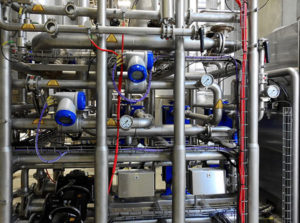
- Packaged turnkey solutions: Complete skid-mounted systems integrate pumps, tanks, valves, and instrumentation — fully assembled, tested, and ready for commissioning.
- After-sales support: From calibration and maintenance to full system upgrades, PMPS provides lifecycle support to keep systems compliant and efficient.
- Proven industry track record: From small municipal plants to major industrial clients, PMPS systems are trusted for their reliability, safety, and accuracy in demanding water treatment environments.
Contact our engineering team to design a custom chemical dosing solution that meets your plant’s operational, safety, and compliance needs. Visit PMPS Water Treatment Solutions to learn more.
Frequently Asked Questions
- What are the main components of a chemical dosing system?
A complete system includes dosing pumps, calibration columns, valves, pulsation dampeners, safety relief devices, control panels, and containment systems. These components work together to ensure accurate and safe dosing performance.
- What safety precautions are needed for chlorination dosing?
Chlorination dosing requires gas detection, emergency ventilation, corrosion-resistant materials, and automatic shutoff systems. PMPS chlorine systems meet strict safety standards to protect operators and facilities.
- How does PMPS ensure compliance in water treatment systems?
Every PMPS dosing system is designed, tested, and documented according to SANS, ISO, and environmental standards. Compliance certificates, calibration records, and FAT/SAT documentation are included.
- What are the benefits of packaged dosing skids?
Packaged skids save time and reduce installation risk. They are fully assembled, wired, and tested before delivery, simplifying commissioning and ensuring consistent quality.
- How often should a chemical dosing system be calibrated?
Calibration frequency depends on chemical type and flow variability but should typically be verified monthly, with full calibration every 6–12 months or as recommended by PMPS service engineers.
The Next Step: Engineering Dosing That Just Works
In today’s water treatment landscape, precision, safety, and compliance define operational success. A well-engineered dosing system doesn’t just deliver chemicals, it protects people, preserves infrastructure, and ensures that every litre of treated water meets quality standards.
By partnering with PMPS, you gain more than equipment; you gain an experienced engineering partner committed to designing smart, safe, and sustainable chemical dosing systems that meet South Africa’s water treatment demands.
Learn more about our Packaged Metering Pumping Solutions or explore our Chemical & Chlorine Dosing Products to see how PMPS can support your next water treatment project.
Quick Specification Highlight
-
Designed for precise chemical injection in industrial processes such as pH correction, disinfection, coagulation/flocculation, corrosion inhibition, scale control, polymer dosing, and general process conditioning.
-
System selection should be based on flow rate and dosing range, operating pressure, chemical properties, solids content, and hazard classification.
-
Typical pump options include diaphragm metering pumps, hydraulic diaphragm pumps, peristaltic pumps, and plunger/piston metering pumps, depending on the duty and chemical characteristics.
-
A complete dosing skid typically includes chemical storage tanks, agitators/mixers, suction pipework, duty and standby pumps, discharge pipework, pulsation dampeners, back-pressure and relief valves, calibration columns, flow meters, instrumentation, electrical panels, and bunded containment.
-
Suitable for sectors including water and wastewater treatment, mining and mineral processing, and broader industrial applications, with SCADA integration possible on modern dosing skids.

What is a chemical dosing system?
A chemical dosing system is a controlled arrangement of equipment designed to inject precise quantities of chemicals into a process stream. These systems are widely used for:
- pH correction
- Disinfection and oxidation
- Coagulation and flocculation
- Corrosion inhibition
- Scale control
- Polymer dosing
- Process conditioning in industrial manufacturing
In industrial environments, dosing systems must operate reliably across fluctuating flows, pressures, temperatures, and chemical concentrations. This is why system design and pump selection are as important as the chemical itself.
PMPS designs and supplies engineered dosing solutions across multiple sectors, including water and wastewater treatment, mining, and heavy industry, with a focus on reliability, safety, and maintainability. PMPS
Key factors that determine dosing system selection
Before comparing pump technologies, engineers should evaluate the following process variables:
Flow rate and dosing range
The required dosing rate must be matched to a pump that can operate accurately across both minimum and maximum demand. Oversized pumps reduce accuracy at low flows, while undersized pumps struggle under peak conditions.
Operating pressure
Discharge pressure influences pump selection and system layout. High-pressure applications require technologies that maintain accuracy without excessive wear or leakage.
Chemical properties
Viscosity, abrasiveness, temperature sensitivity, and chemical aggressiveness all affect pump performance and material selection.
Solids content
Some chemicals contain suspended solids or crystallise over time, requiring pumps that can tolerate particulate matter without clogging.
Hazard classification
Corrosive, toxic, or hazardous chemicals require containment, leak protection, and compliant materials to ensure operator safety and environmental protection.
Overview of common chemical dosing pump technologies
Different pump technologies are suited to different industrial applications. Understanding their strengths and limitations is essential for correct selection.
Diaphragm metering pumps
Diaphragm pumps are widely used for chemical dosing due to their accuracy, leak-free operation, and compatibility with aggressive chemicals.
Best suited for:
- Medium to high accuracy applications
- Hazardous or corrosive chemicals
- Continuous industrial operation
They isolate the chemical from mechanical components, reducing leak risk and improving safety.
Hydraulic diaphragm pumps
Hydraulic diaphragm pumps are an advanced form of diaphragm technology, using hydraulic fluid to drive the diaphragm evenly across each stroke. This results in superior accuracy and extended diaphragm life.
Best suited for:
- High-pressure applications
- Critical dosing points
- Municipal and industrial water treatment
- Chemicals requiring consistent, repeatable dosing

Peristaltic pumps
Peristaltic pumps move chemicals through a flexible hose using a rotating roller mechanism. They are simple and tolerant of abrasive or viscous fluids.
Best suited for:
- Slurries and abrasive chemicals
- Low-pressure applications
- Intermittent dosing
Limitations include hose wear and reduced accuracy at higher pressures.
Plunger (piston) metering pumps
Plunger pumps deliver high pressures and are mechanically robust, but they expose seals and packing to the chemical.
Best suited for:
- High-pressure injection
- Clean, non-hazardous chemicals
They are less suitable for corrosive or toxic chemicals unless additional containment measures are implemented.

Why system design matters as much as pump selection
Even the best dosing pump will perform poorly if installed in a poorly designed system. Industrial dosing reliability depends on the complete system layout.
Essential components of a chemical dosing skid
A properly engineered chemical dosing skid typically includes:
- Chemical storage tanks
- Agitators or mixers (where required)
- Suction pipework and strainers
- Dosing pumps (duty and standby)
- Discharge pipework and injection points
- Pulsation dampeners
- Back-pressure and relief valves
- Calibration columns
- Flow meters and instrumentation
- Electrical panels and control interfaces
- Bunded containment
PMPS specialises in custom chemical dosing skids, engineered as complete systems rather than individual components.
Bunding and containment requirements
Not all dosing systems legally require bunded containment, but in practice, bunding is strongly recommended for most industrial chemical applications.
Bunding protects against:
- Chemical spills and leaks
- Environmental contamination
- Operator exposure
- Regulatory non-compliance
For corrosive, toxic, or environmentally hazardous chemicals, bunded skids are considered best practice and are often mandatory under site-specific safety regulations.
Polymer dosing and preparation considerations
Polymer dosing presents unique challenges due to viscosity, ageing, and sensitivity to shear. Poor polymer preparation leads to inconsistent dosing, blockages, and ineffective treatment.
Polymer preparation plants ensure:
- Correct dilution ratios
- Consistent solution quality
- Stable viscosity for accurate dosing
- Reduced operator intervention
PMPS polymer preparation systems are designed to integrate seamlessly with dosing skids and downstream processes.
Application examples across industries
Mining and mineral processing
Chemical dosing systems are used for flocculation, pH correction, and water recovery. Systems must tolerate abrasive environments and variable operating conditions.
Industrial wastewater treatment
Accurate dosing is critical for compliance, sludge management, and cost control. Systems must integrate with flow-based control and SCADA platforms.
Potable water treatment
Reliability and safety are paramount. Leak-free pump technologies, redundant configurations, and precise control are essential.
PMPS supports these sectors through its water and wastewater industry solutions.
The value of custom-built PMPS dosing skids
Off-the-shelf dosing systems often fail to account for site-specific challenges such as space constraints, chemical variability, or integration requirements.
Custom PMPS dosing skids offer:
- Correct pump technology selection
- Optimised layout for maintenance access
- Integrated safety and containment
- Compatibility with existing plant infrastructure
- Long-term reliability and reduced lifecycle cost
By engineering each skid to suit the application, PMPS helps clients avoid costly retrofits and operational inefficiencies.
Final thoughts
Selecting the right chemical dosing system is a strategic engineering decision with long-term operational consequences. By evaluating process conditions, chemical characteristics, and system requirements holistically, engineers can specify dosing solutions that deliver accuracy, safety, and durability.
Custom-engineered chemical dosing skids provide the flexibility and reliability required in modern industrial environments, particularly where compliance, uptime, and cost control are critical.
Definition Block
Chemical dosing system
A chemical dosing system is a controlled setup of equipment designed to inject precise quantities of chemicals into a process stream for tasks such as pH correction, disinfection, flocculation, corrosion inhibition, scale control, and polymer dosing.
Dosing skid
A dosing skid is a complete engineered dosing package that typically includes storage tanks, pumps, pipework, valves, calibration equipment, instrumentation, control panels, and containment, all arranged as one integrated system.
Hydraulic diaphragm pump
A hydraulic diaphragm pump is a dosing pump that uses hydraulic fluid to move the diaphragm evenly on each stroke, helping deliver more accurate, repeatable dosing and longer diaphragm life, especially in high-pressure or critical applications.
Bunded containment
Bunded containment is a protective containment area built around chemical equipment or storage to help prevent spills, operator exposure, environmental contamination, and possible non-compliance.
Polymer dosing
Polymer dosing is the controlled addition of polymer chemicals into a process, usually where correct dilution, stable viscosity, and careful preparation are important to avoid blockages and inconsistent treatment performance.
Frequently Asked Questions
How do I decide which pump technology is right for my chemical dosing application
Pump selection depends on flow rate, pressure, chemical aggressiveness, viscosity, solids content, and safety requirements. Hydraulic diaphragm pumps are often preferred for critical or hazardous applications.
What are the essential components of a chemical dosing skid?
A dosing skid typically includes storage tanks, pumps, valves, calibration equipment, containment, instrumentation, and control systems.
Do all chemical dosing systems require bunded containment?
Not always, but bunding is recommended for most industrial chemicals and may be mandatory depending on safety and environmental regulations.
How do I size a chemical dosing pump correctly for my process
Pumps should be sized to operate within their optimal accuracy range under both minimum and maximum dosing conditions.
Can an existing plant integrate a new chemical dosing skid with SCADA?
Yes. Most modern dosing skids are designed for straightforward SCADA integration using standard signals and communication protocols.
